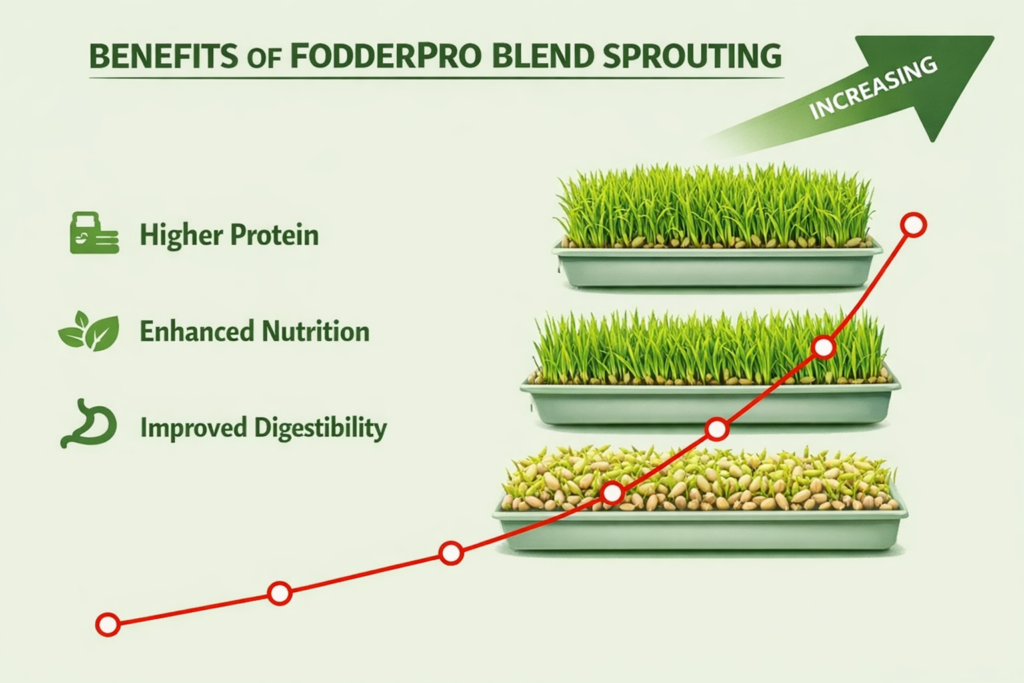
Fodder is fresh, sprouted grain or seed grown for livestock and poultry feed. Through soaking and germination, dry seed develops into a dense mat of roots and green shoots that animals readily consume. The result is a fresh, palatable feed option that can be used as part of a practical, year-round feeding program.
As the seed sprouts, it changes from dry grain into a living forage that may offer improved feed appeal and more accessible nutrition when properly grown and fed. For many producers, fodder is a simple way to add a fresh-feed component to an existing ration and help bridge the gap between stored feed and pasture-style forage.
What Is FodderPro Blend?
FodderPro Blend is our signature sprouting blend, developed through years of hands-on refinement, testing, and practical experience. It is made from a carefully selected combination of seeds and produced through a consistent process designed to create fresh, high-quality sprouted fodder with reliable sprouting performance and practical feeding value.
FodderPro Blend is designed for use across a wide range of livestock and poultry feeding programs. By combining the natural strengths of sprouts to produce a fresh, soft, highly palatable fodder that can be offered to many common farm and homestead animals as part of a balanced feeding approach.
Seed Sourcing & Preparation
We source seed from reputable suppliers and use a preparation process that includes soaking, rinsing, and multiple washes before sprouting. These steps are part of our normal process to promote consistency and cleanliness before the seed enters the sprouting cycle.
Custom Blends
We are open to custom blends for specific livestock, feeding goals, or agricultural applications. If you need a blend tailored to a particular use, we welcome you to reach out and inquire. In most cases our standard FodderPro Blend is the preferred option for producers seeking a reliable, versatile sprouted fodder solution.
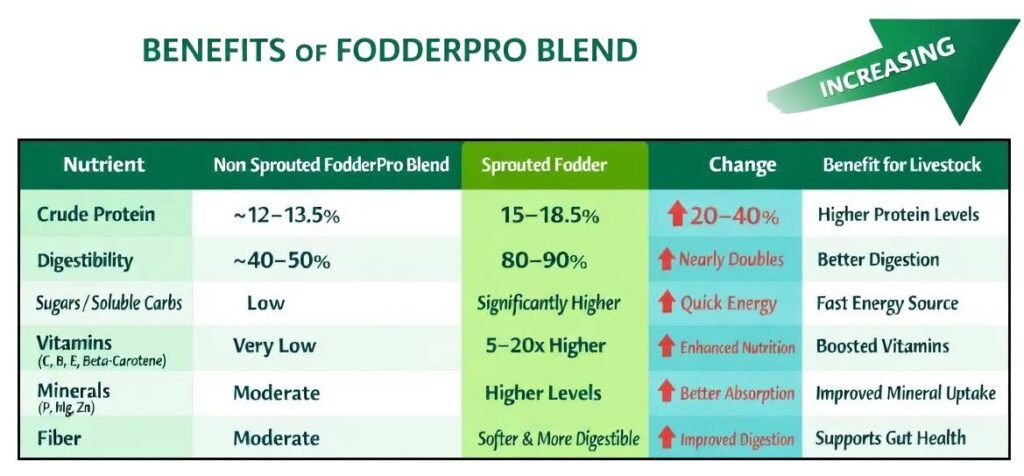
Sprouted Fodder Pro Blend Nutrient Profile:
| Nutrient Category | Typical Dry Grain | Sprouted Fodder | Change / Notes | Key Benefit |
|---|---|---|---|---|
| Crude Protein (CP) | 12–13.5% | 15–17%) | ↑20–40% (mainly from starch loss + some synthesis) | Higher protein levels; better amino acid profile (e.g., more lysine) |
| Digestibility | 40–55% | 80–90% | Nearly doubles due to enzyme activation (amylase, protease) | Better feed efficiency, less waste |
| Energy (TDN or ME) | Moderate–High (starch-rich) | Slightly lower total but highly usable | Starch ↓15–25%; soluble sugars ↑ sharply | Quick energy source from sugars |
| Total Soluble Carbs / Sugars | Low | Significantly higher | Starch converted to simple sugars | Fast energy, improved palatability |
| Fiber (Crude Fiber / NDF) | Moderate (8–12%) | Higher total fiber, but softer & more digestible | Cellulose often ↑; becomes enzymatically broken down | Supports gut health without harshness |
| Fat (Ether Extract) | 2–4% | 2.5–5% (slight ↑) | Minor increase; better fatty acid balance | Improved fat quality |
| Vitamins | Very low (esp. C) | 5–20× higher | Vitamin C: newly formed (5–50+ mg/100g DM) B vitamins (B1, B2, B3, B6): 1.5–5× ↑ Vitamin E & beta-carotene: ↑ (especially with light) | Boosted overall nutrition & immunity |
| Minerals (P, Mg, Zn, Fe, etc.) | Moderate | Similar total levels but much higher bioavailability | Phytate ↓40–80% → better absorption of phosphorus, zinc, iron, magnesium, calcium | Improved mineral uptake; better Ca:P support |
Additional:
Anti-nutrients — Phytate reduction dramatically improves mineral bioavailability.
Enzymes & Bioactives — Amylase, protease, and other enzymes activate; higher antioxidants and phenolics.
Amino Acids — More essential amino acids become available and soluble (e.g., lysine, threonine often ↑).
Our trays:
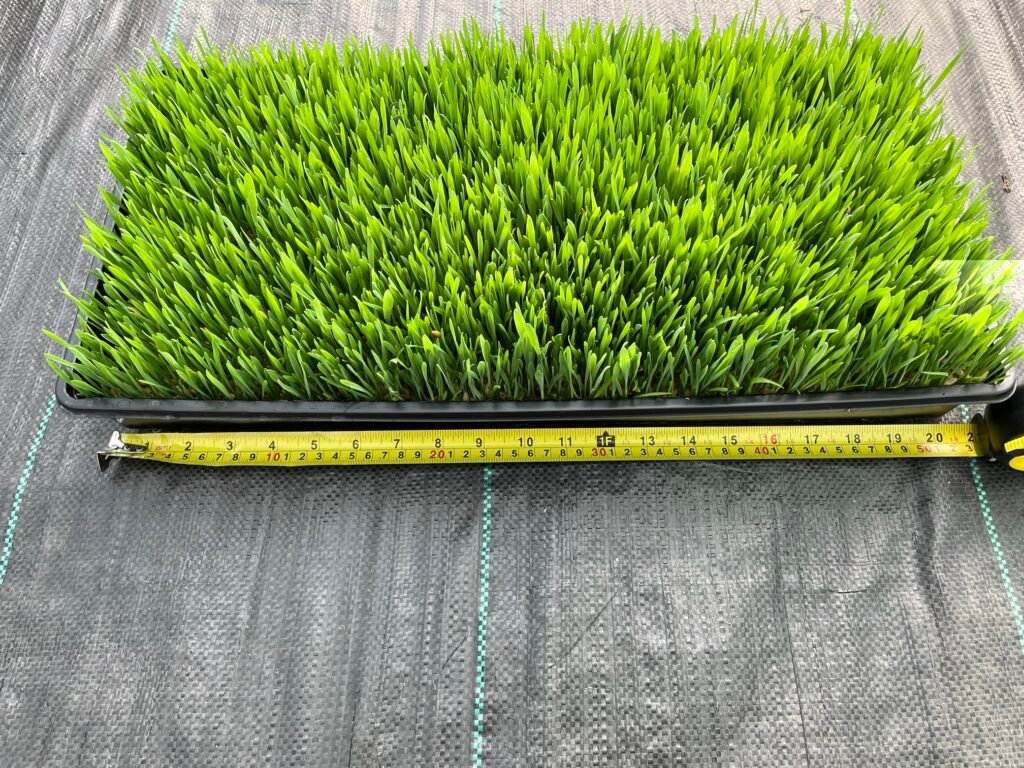
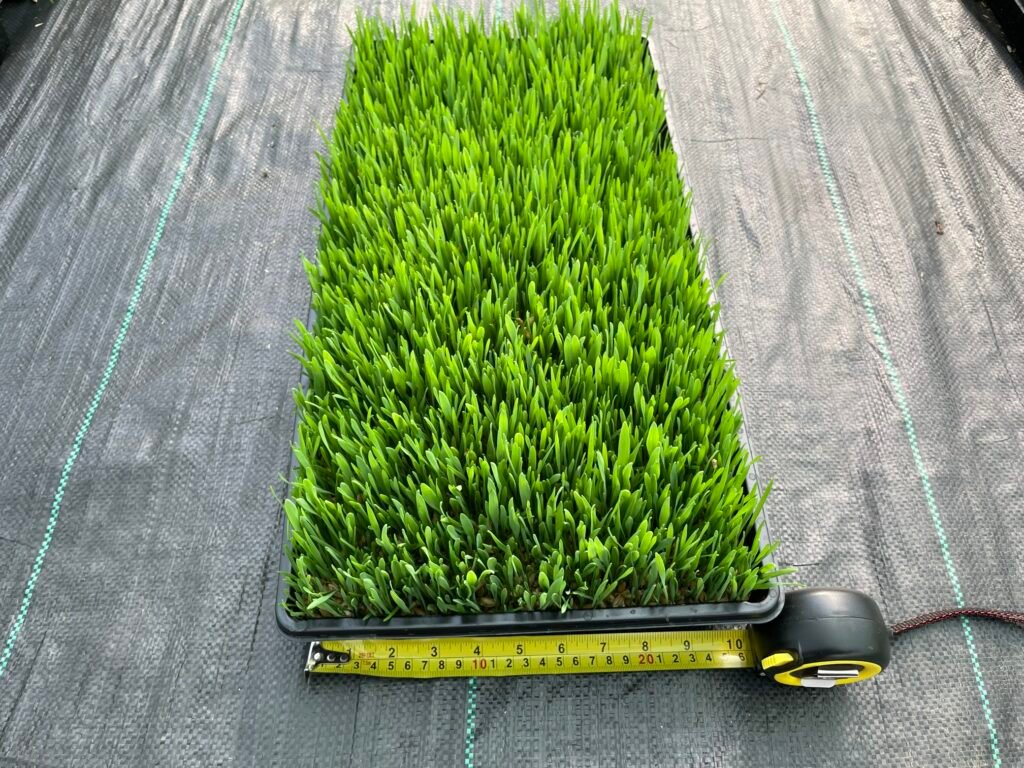
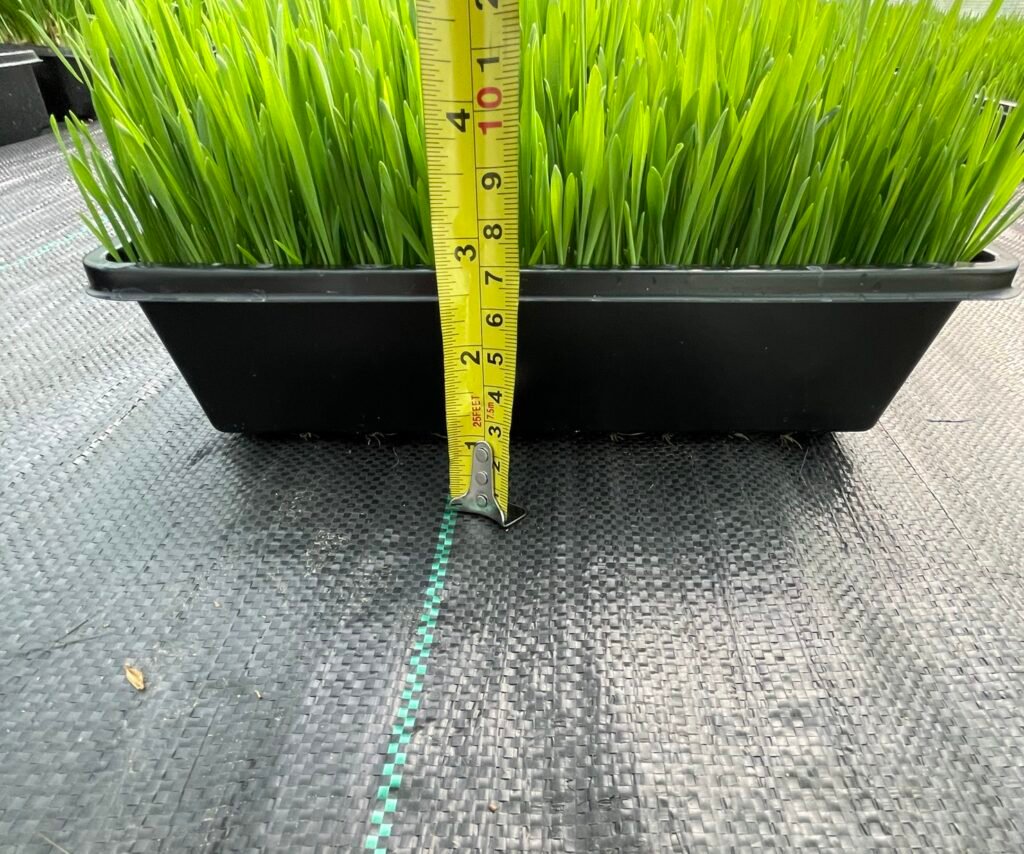
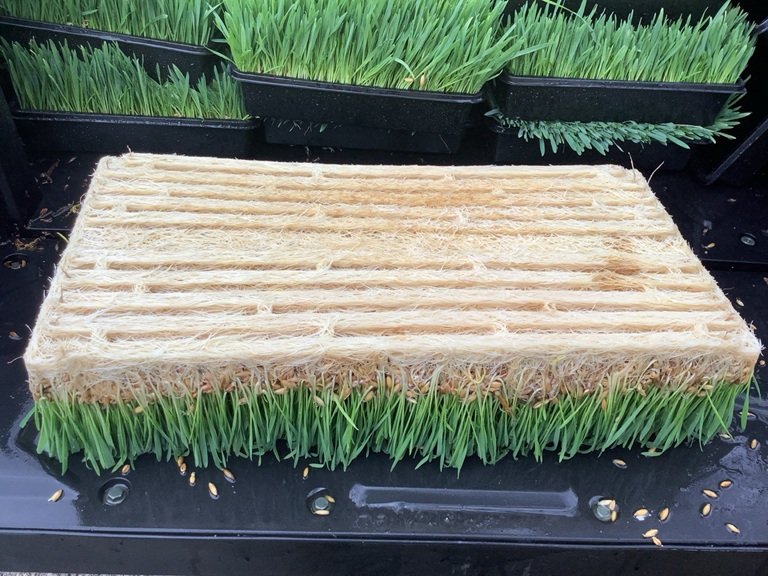
Our Fodder Pro trays are produced from a premium blend oats, barley, and wheat. Each tray is approximately 20″ x 10″, generally ready for use in 7–9 days from first saturation. At delivery, trays typically weigh about 5–8 pounds and provide a fresh, dense mat of sprouted fodder.
NOTICE: Weights, yields, and nutrient values may vary greatly due to weather, seed lot variability, watering practices, growing conditions, and harvest timing. All values and descriptions are provided for general informational purposes only and are not a guarantee of the exact performance, weight, or nutritional content of any individual tray.
Random seeds: As with typical grain lots, from time to time other stray seeds may be present, such as corn, beans, or other seeds that may have accidentally made their way into the bags from the seed distributor. These occurrences are rare, but they do happen occasionally, and you may sometimes find an unexpected sprout in your fodder tray. We take painstaking efforts to inspect and remove these before seeds go into the sprouting trays, but some may still get through.
Palatants: As we grow and expand our product line, some blends may include a light coating of natural and organic flavor-enhancing ingredients to improve taste and help encourage livestock acceptance. When used, these ingredients are intended to consist only of natural, organic, and livestock-appropriate elements commonly found in animal feed. Specific ingredients, coating levels, and blend formulations may vary from time to time based on product type, availability, and seasonal conditions.
Pricing: Pricing is subject to change at any time as we expand our infrastructure, capabilities, and production capacity, improve our workflow, and secure better bulk pricing from seed suppliers and other materials at scale. As we grow, we intend to pass these savings and added value on to our customers whenever possible. Our goal is to keep our fodder trays as affordable as possible.
Disclaimer:
Every farm and feeding program is different, so actual results can vary. Seed lot, blend, seeding density, water quality, growing conditions, harvest timing, storage, and feeding practices all affect fodder performance. Any information on nutrient values, digestibility, palatability, fresh-weight gain, dry-matter change, or livestock response is provided for general educational purposes only, based on reviewed studies, extension resources, and general agricultural knowledge, and should not be interpreted as a guarantee, warranty, or promise of specific results. Producers should evaluate fodder within their own ration and consult a qualified veterinarian, livestock nutritionist, or other professional before making major feeding changes.